GAME COMPANION · COLLECTION SYSTEM
Fortnite Sprite Tracker
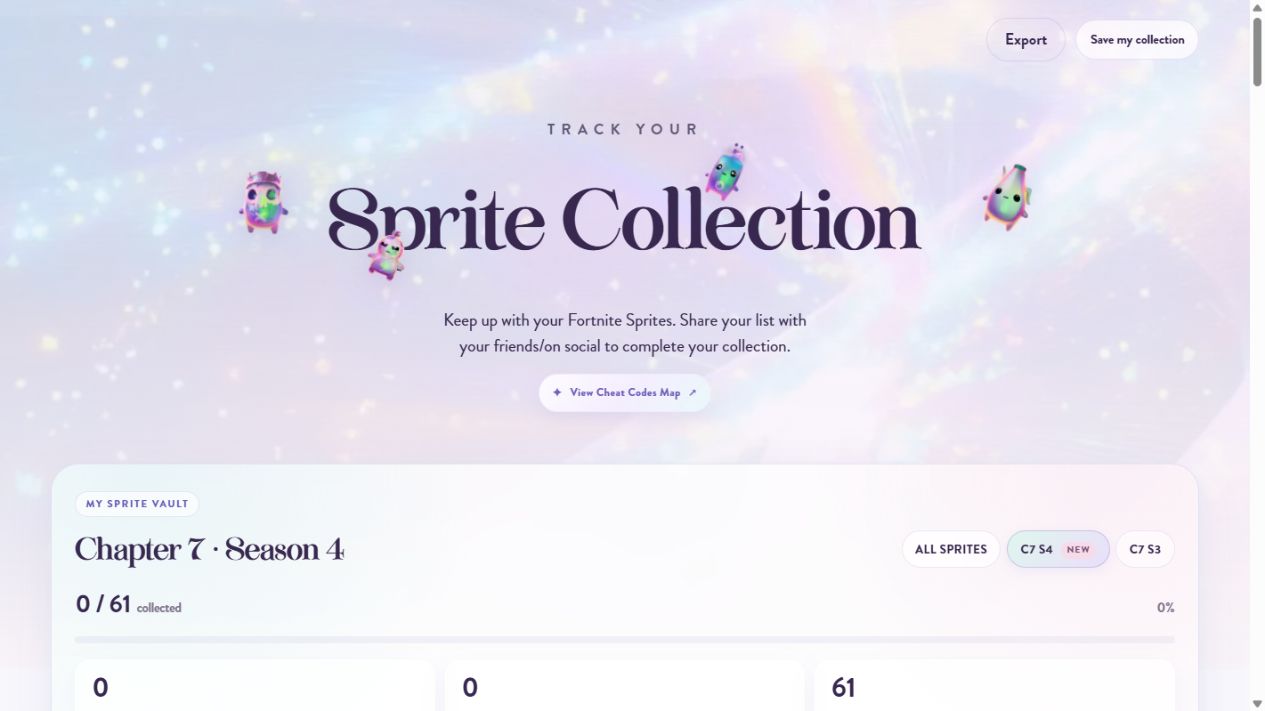
A growing set of Sprites spans families, variants, rarities, and seasons. A flat checklist makes the collection harder to navigate and cannot express the difference between finding an item, mastering it, and simply liking it.
- Product direction
- Support the whole collection journey: starting, returning, mastering, and finishing.
- Current result
- The public tracker is live, with working collection browsing, season navigation, and item details. These captures show the product’s interface and interaction model; adoption and retention have not yet been quantified.
Systems thinking
The structure behind the screens.
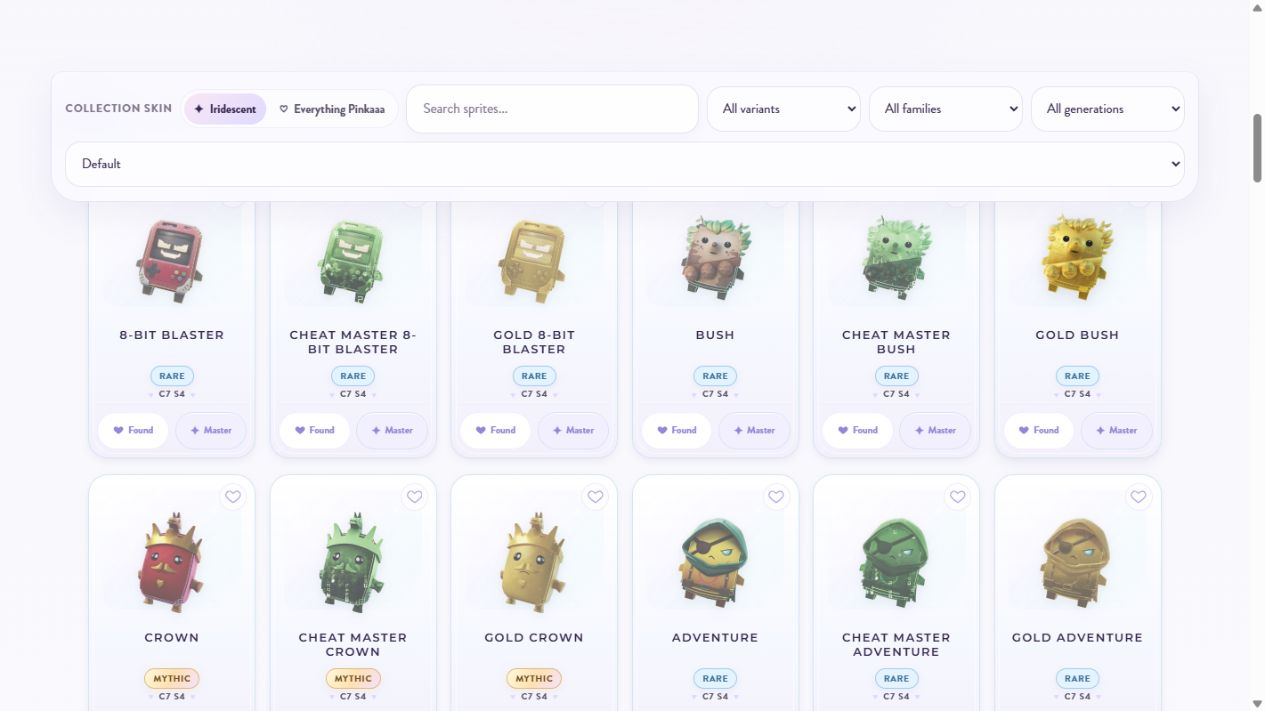
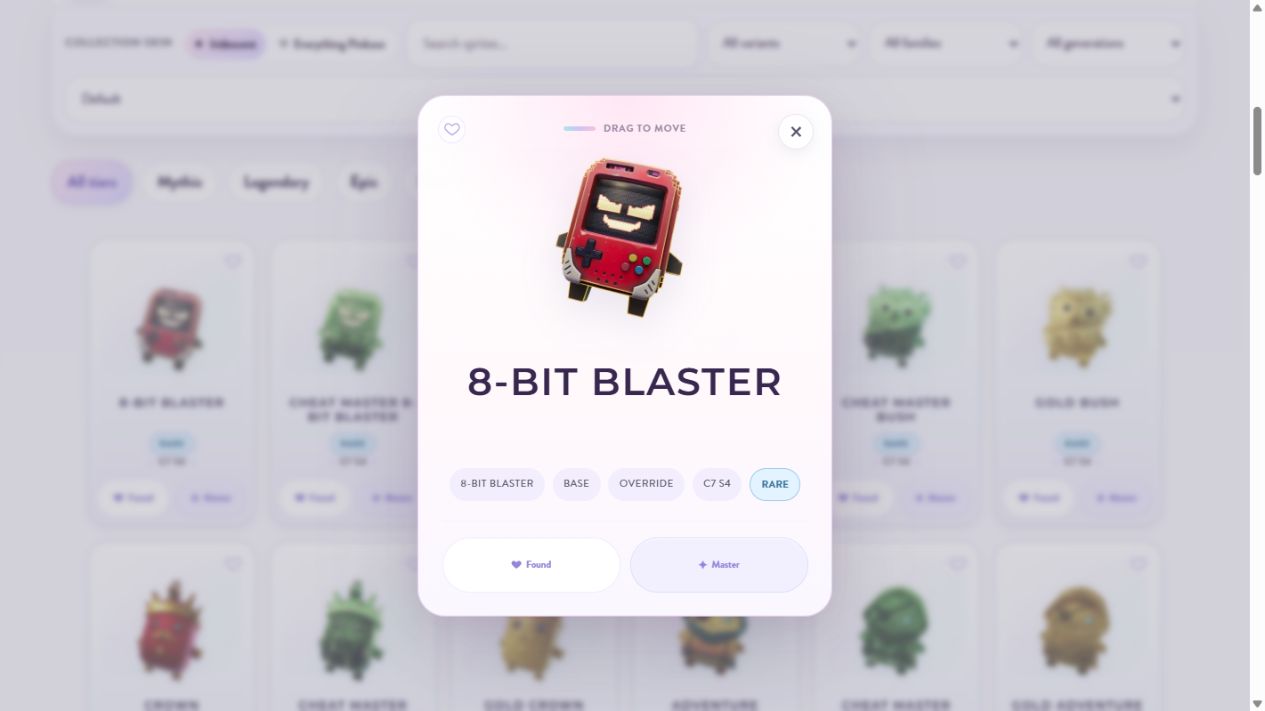
I modeled the collection around the player’s decisions: which season to browse, which items are missing, and which actions matter for an individual Sprite. Search and filters narrow the collection; a detail view keeps the same state controls close to the item.
- Season-aware collection views, progress summaries, and tier counts.
- Search, family and variant filters, rarity controls, and sorting.
- Distinct Found, Mastered, and Favorite controls on cards and in the detail view.
- A guest-first collection experience with export, optional saved collections, and a celebration when no Sprites are missing.
Design decisions
Keep preference separate from progress
Favoriting a Sprite is not the same as finding or mastering it. Distinct controls let the product represent those different intentions.
Make the collection readable at two scales
The dashboard answers how far a player has progressed. The card and detail view answer what an individual Sprite is and what the player wants to do with it.
Use delight to support utility
Mastering a Sprite celebrates the card, and an empty Missing view recognizes a completed collection. Completion is a milestone: the interface needs to support a return to collecting when new Sprites are added.
From product thinking to code
AI-assisted building.
Human product judgment.
I use Cursor, Claude, and Codex to make product ideas testable in code. I define the problem and interaction rules, direct the build, inspect the working experience, and iterate on behavior and visual detail. The tools accelerate implementation; product judgment and release decisions stay with me.
Reflection
What this taught me.
Playful products still need precise state models. Keeping preference, collection, and mastery distinct creates a stronger foundation than treating every interaction as a single completion flag.
Explore the work
Independent fan project by IridescentSugar. Not affiliated with or endorsed by Epic Games. Fortnite and game imagery belong to their respective owners.