CREATOR OPERATIONS · AI-ASSISTED PRODUCT DEVELOPMENT
Createhers Société
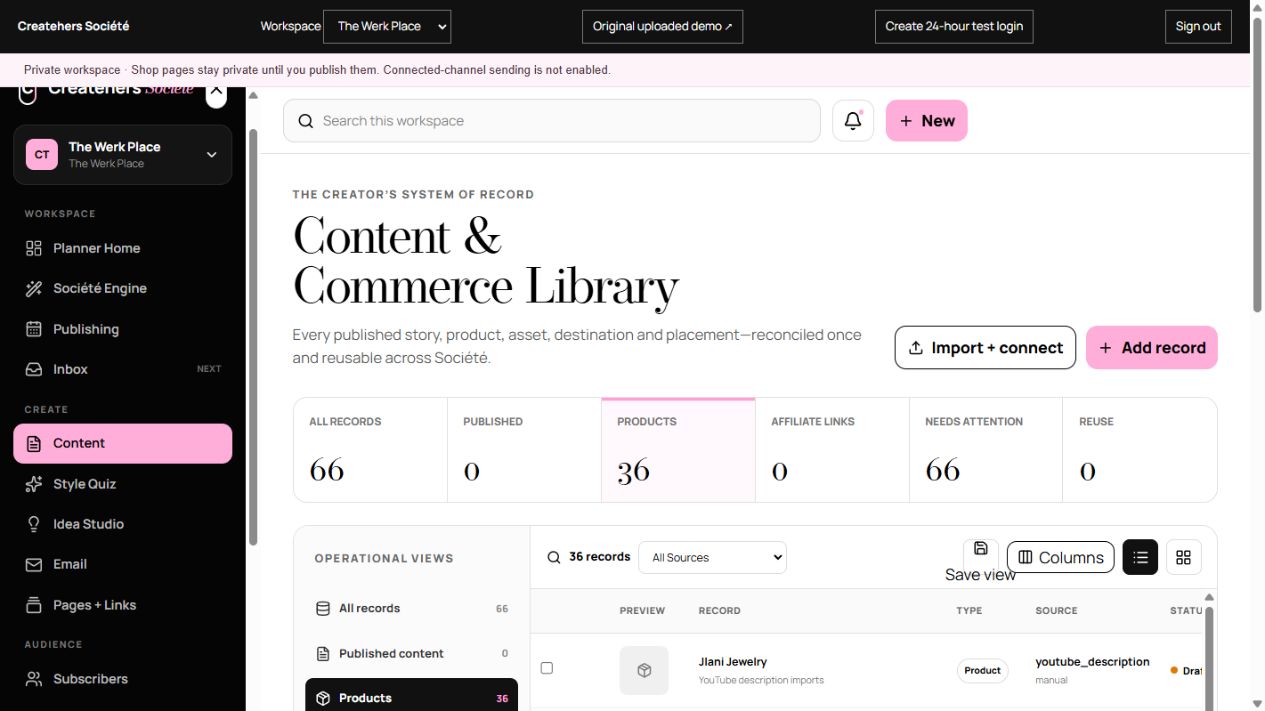
A single creator story can contain products, places, affiliate destinations, and editorial assets. Rebuilding those relationships for each page or campaign creates duplicate work and makes it difficult to know which information is ready to use.
- Product direction
- A creator’s archive should become a reusable product system, instead of another collection of disconnected links.
- Current result
- The current build connects a working library and private workspace with a public style quiz and response collection. It demonstrates the platform model; inbox, connected-channel sending, and further integrations remain development work. Business impact has not yet been measured.
Systems thinking
The structure behind the screens.
I approached Société as a connected platform. The content record is the shared foundation; planning, publishing, public experiences, and review workflows are surfaces that use it. I defined the navigation, record structure, review states, and boundaries between private work and public output.
- A content and commerce library with operational views, table/grid modes, record inspection, and source information.
- A multi-workspace shell with consistent navigation across creator tools.
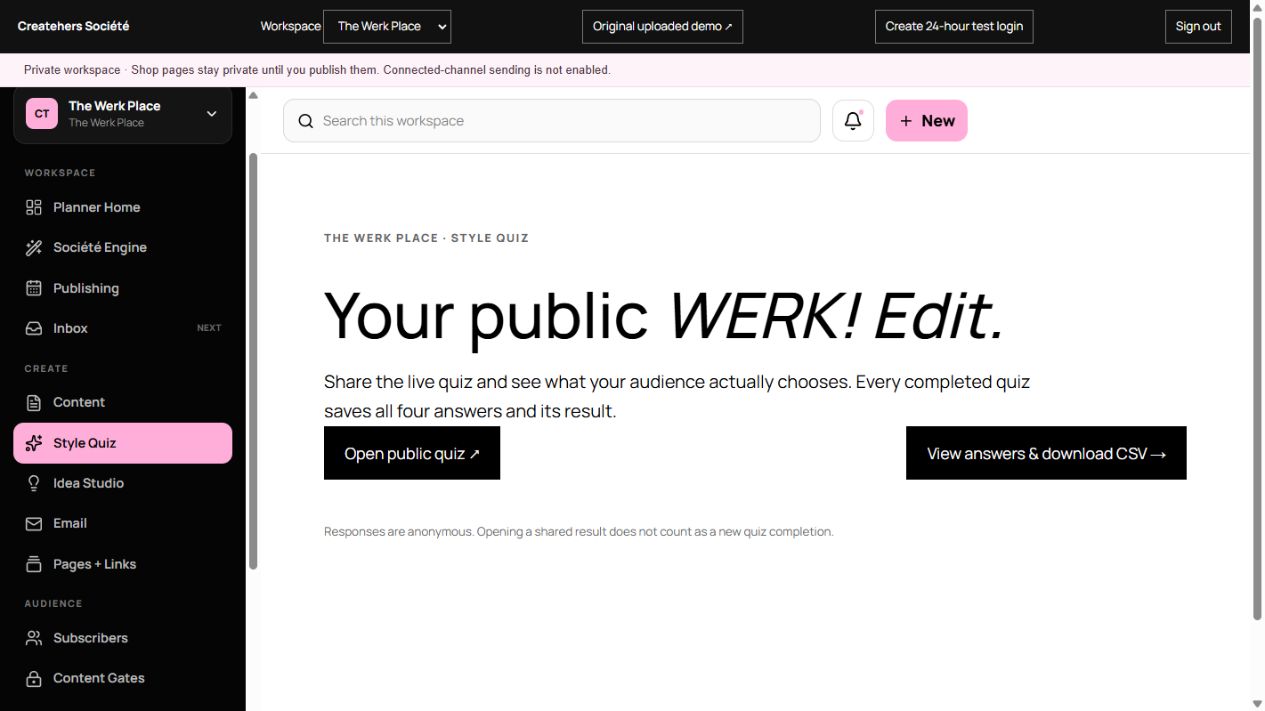
- A live WERK! Edit style quiz with shoppable results and share links, paired with a private answer dashboard and CSV export.
- Explicit private/draft boundaries; connected-channel sending remains disabled in the captured workspace.
Design decisions
One record, many uses
Treat the story, product, link, and placement as related information. A record’s origin and where it is used matter as much as its title.
Make uncertainty visible
Unknown link or image health is a review state, not a silent assumption. Imported information should not become trusted simply because a tool ingested it.
Separate creation from publication
The creator can explore and prepare work inside a private workspace. Publishing is a deliberate boundary, and integrations marked as next are not presented as complete.
From product thinking to code
AI-assisted building.
Human product judgment.
I use Cursor, Claude, and Codex to make product ideas testable in code. I define the problem and interaction rules, direct the build, inspect the working experience, and iterate on behavior and visual detail. The tools accelerate implementation; product judgment and release decisions stay with me.
Reflection
What this taught me.
The important design work is deciding what stays consistent across tools: identity, source evidence, states, and control. That foundation makes AI-assisted building more useful as the platform grows.
Explore the work